
Written by Isabelle J
I’m a nutritionist, so I like to think I have a good handle on my health. A few years ago, I did a full health check-up in Korea and the results came back saying my “internal age” was 10 years younger. Naturally, I thought, Great! I’ve got plenty of time. I’ll just try for kids naturally when I’m ready.
I didn’t realize how naive that was.
It wasn’t until a close friend, Hellynn, gave me a gentle nudge to go freeze my eggs and see a fertility doctor “just in case” that I got my reality check.
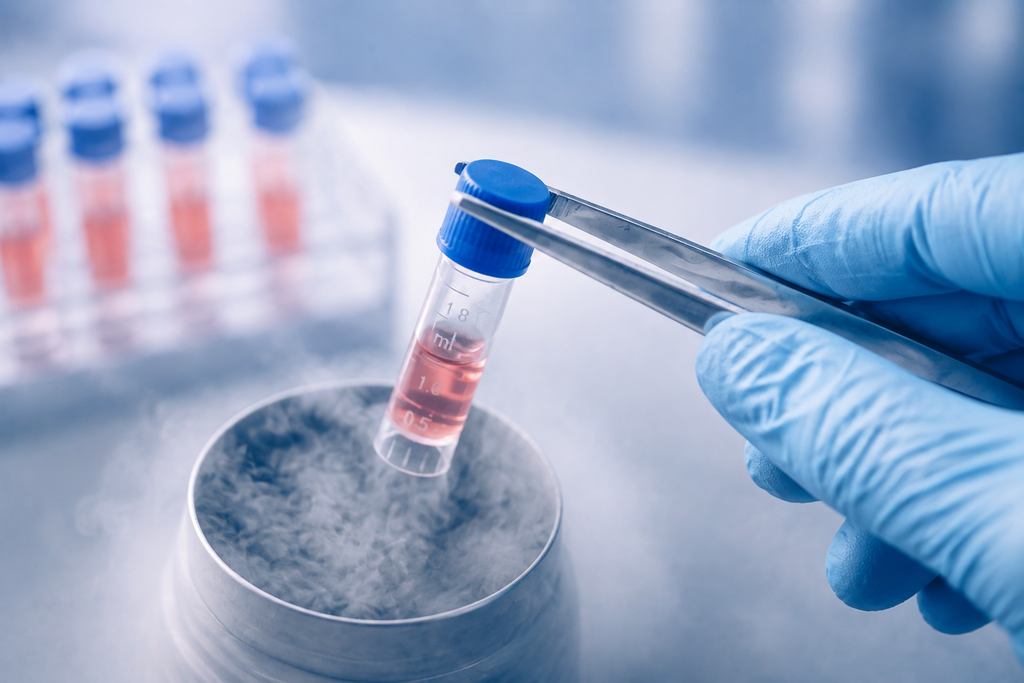
The fertility timeline no one really talks about
Thirty years ago, most first-time moms in the U.S. had their first child between 20–28. Today, that range has shifted up to 26–36. Like a lot of women, I prioritized school, career, and building a full life before kids. But the truth is, biology hasn’t really shifted along with us.
And the way it actually works is something most of us didn’t learn in high school sex ed.
We’re born with about a million to two million eggs, but by puberty that number has already dropped to around 300,000. Each month, one egg is released while another thousand die off. So, over time, the total number declines. But here’s the part I misunderstood: it’s not just the number of eggs that matters, it’s their quality.
Egg ‘quality’ doesn’t mean intelligence or the health of a future child. A normal egg has 23 and an abnormal one doesn’t. An abnormal egg doesn’t fertilize properly or doesn’t implant which can lead to miscarriage. And as we age, the chances of releasing a normal egg shrink significantly by each year.
The numbers that made me stop and think
Here’s what floored me:
- Around age 30: approximately 75% of eggs are chromosomally normal
- By age 35: that drops to about 50%
- By age 40: only about 25% remain chromosomally normal
That shift explains why it can feel so much harder to get (and stay) pregnant later in life.
It doesn’t mean it’s impossible. I know women who had healthy babies in their 40s. But I also know women who struggled and went through heartbreaking miscarriages. Both are real.
The emotional rollercoaster
Hearing all of this made me deeply uncomfortable. On one hand, I felt frustrated and anxious. Most of my life, all I was taught was how not to get pregnant. Then suddenly, in my mid-30s, people start saying, “You need to get pregnant now or it might not happen later.”
It felt like whiplash.
I don’t like fear tactics but I also don’t want to live in denial. What I realized is this: the cliff people talk about isn’t quite as steep as some make it sound but the gradual decline is very real and ignoring it doesn’t make it go away.
My choice
I had three options:
- Try to get pregnant right away.
- Wait and hope I’d be one of the “lucky” ones and get pregnant naturally at a later age
- Use technology to give myself more choices
Freezing my eggs wasn’t an easy decision. It’s emotional, it’s expensive, and it forces you to face questions you might not feel ready for. But for me, it came down to peace of mind. I wanted the peace of knowing I had packed the right gear for the journey ahead, so I could focus on the adventure instead of worrying what I might be missing.
I started thinking of it like insurance. You don’t get house insurance because you expect your house to be flooded one day. You get it so that if something unpredictable happens, you’re not left without options. And it hit me: if I’m willing to protect my home, which I can renovate, sell, or rebuild, why wouldn’t I do the same for my one and only body and the possibility of becoming a mother?
The truth is, fertility struggles are showing up earlier than anyone expects, even in women who are young and healthy. Fertility rates are rapidly dropping worldwide and no one can fully explain why. Between microplastics, chemicals in our food, and all the hidden toxins in our environment, there are so many factors outside our control. For me, freezing my eggs wasn’t about fear, it was about creating space, freedom, and empowerment for my future self.
That’s where Korea came in. The clinics here are world-class at a more affordable price range – high success rates, cutting-edge technology, and doctors who genuinely took the time to explain my options with empathy, not pressure. Everything from testing to treatment was in one place and fast so the process felt much smoother, efficient and less stressful.
So I did it. And now, I can honestly say it’s one of the best decisions I’ve made for myself. Not because I know exactly how my future will look, but because I’ve given myself more options. That feels empowering. And if you’re considering this path, I want you to know, you can give yourself that same choice too.
If you’re planning egg freezing in Korea and on the fence about it, we’re always happy to point you toward reliable resources and help you navigate your options. Get our detailed guide and book a free call with us.